













Have a story idea
Have a story idea? Send it to us here.
Source : Wikimedia
February 27, 2026
Author : Alex Bustillos
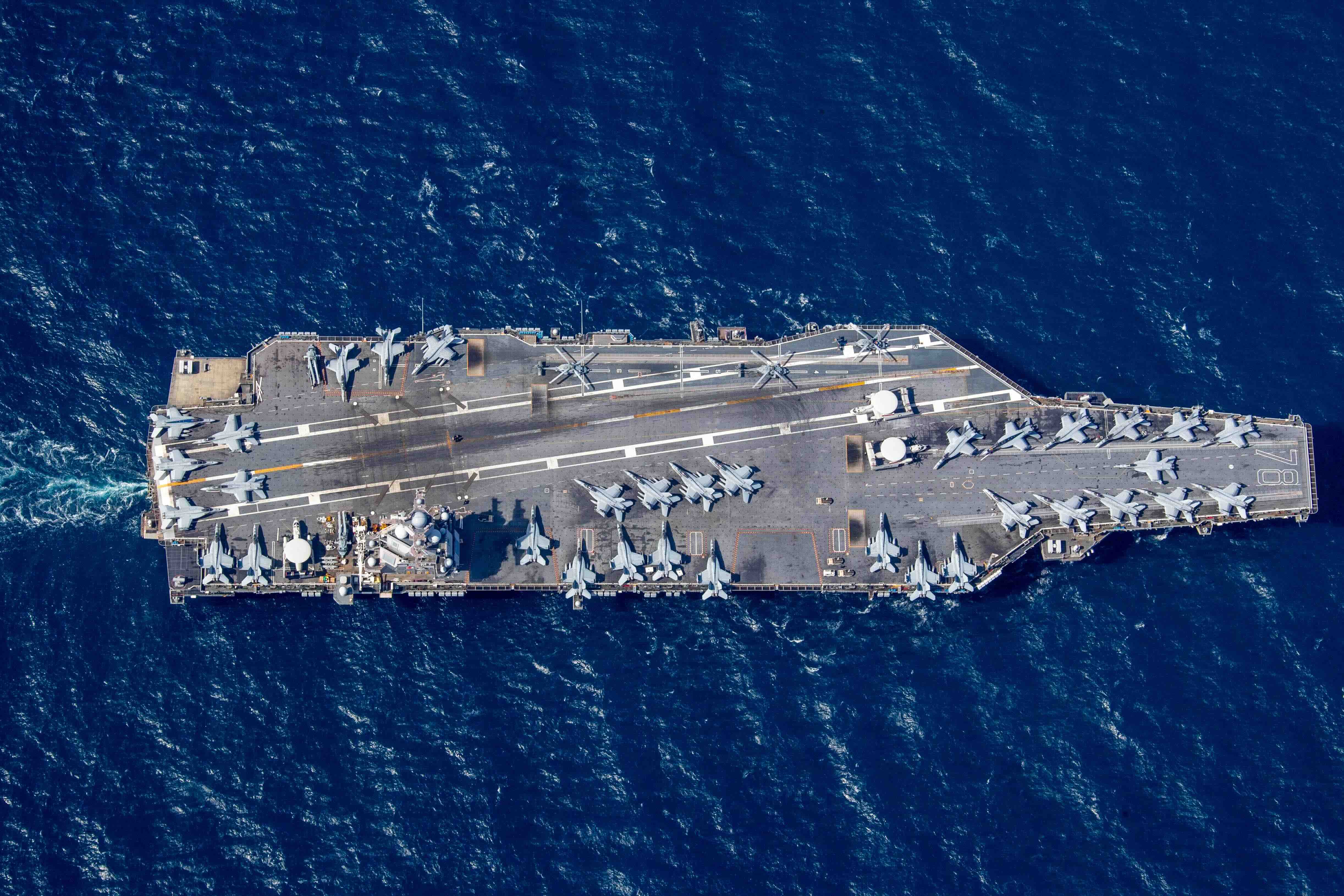
Possible military confrontation between the United States and Iran has become a heated topic in policy circles. It was just a short time ago that the United States ended its years of military intervention in Afghanistan and Iraq.
A variety of beltway groups in Washington are calling for a bold operation, though there is no formal congressional authorization for war. The American public appears not to support such a war, with only 21 percent backing an attack on Iran in a recent poll.
Economists and industry analysts are warning about the economic risks of escalation that could be extremely detrimental and extensive for the U.S. economy and, consequently, the construction sector, especially if such a scenario disrupts global energy markets.
A recent paper by retired U.S. Marine Corps General Kenneth F. McKenzie Jr. highlights that U.S. military installations in the Gulf region do not have much strategic depth and would be vulnerable to waves of inexpensive Iranian missiles and drones.
Such a vulnerability, combined with the narrow geography of the Strait of Hormuz, the passageway through which nearly twenty percent of global crude oil supplies pass daily, means that a U.S. attack on Iran could disrupt energy supplies and markets.
Already, oil markets have started to price in geopolitical risk: Brent crude was recently trading near the highest level in seven months, over $71 a barrel, indicating that investors are concerned the situation could disrupt Middle East supply.
If conflict disrupts exports or closes the Strait of Hormuz, oil prices might soar to well above $90-$100 per barrel, thereby again raising global inflationary pressure and, consequently, economic growth, analysts warn.
As far as the U.S. economy is concerned, a rise in energy costs would be similar to an inflationary shock, which would, therefore, lead to increased costs for transportation and manufacturing on the one hand and pressure on households already struggling with the consumer cost of living on the other. The potential for a crude oil price surge up to the $120, $150 level, a scenario that some analysts deem as an extreme disruption, would most likely result in inflation becoming higher, consumer confidence getting weaker, and the risk of recession in energy-importing markets being raised.
In construction, escalating energy and material prices, already strained by supply chain problems, could lead to higher project and bid costs. Increased diesel and fuel prices affect earthmoving, aggregate transportation, and heavy equipment operations, raising contractor input costs and exerting pressure on infrastructure budgets.
As U.S. election primaries draw closer, policymakers may not want to risk the economic fallout from a military escalation, since consumer confidence and market stability remain fragile. The situation highlights how tightly geopolitics, energy security, and the domestic economy are linked, particularly for those sectors that rely on stable input costs and a predictable financing environment.
Category : Disabled Veteran Businesses Veteran Business Investment in Infrastructure Market Watch State Government