







Have a story idea
Have a story idea? Send it to us here.
Source : Unsplash
July 14, 2026
Author : Patty Allen
The US Census Bureau revealed that North Carolina has grown by nearly 150,000 people, making it one of the fastest-growing states. It was also ranked at the top location for domestic migration.
This continued population growth has led to considerable infrastructural investments, which have contributed immensely to Charlotte’s construction market.
According to Dodge Data & Analytics, Charlotte’s construction market is forecast at $13.2 billion in 2026, marking the second consecutive year of projected gains. Kirk Matthews, the Vice President of Frampton Construction, notes that the current demand is more measured and directly tied to demand, unlike the unstable post-COVID surge.
Kirk explained, “In some other geographic areas, activity may be concentrated in only one or two sectors, but in Charlotte, there is strength across several asset classes at once, with projects under construction as well as a solid pipeline of upcoming work.”
The Dodge survey projects that office and bank building starts will total $491 million in 2026. This is the second highest-projected total in the last 5 years, since the sector saw a dismal drop to $162 million in 2024.
Domestic migration and a population boom have contributed to growth in the residential construction sector. An estimated $8.7 billion in investments is projected for residential start, with $6.6 billion for single-family homes and $2 billion for multifamily homes.
There is also an increase in highway and bridge construction projects, with an estimated spending of $486 million, up from $382 million in 2025. Other sectors seeing considerable spending forecast in 2026 are environmental public works at $582 million and electric utilities at $20 million.
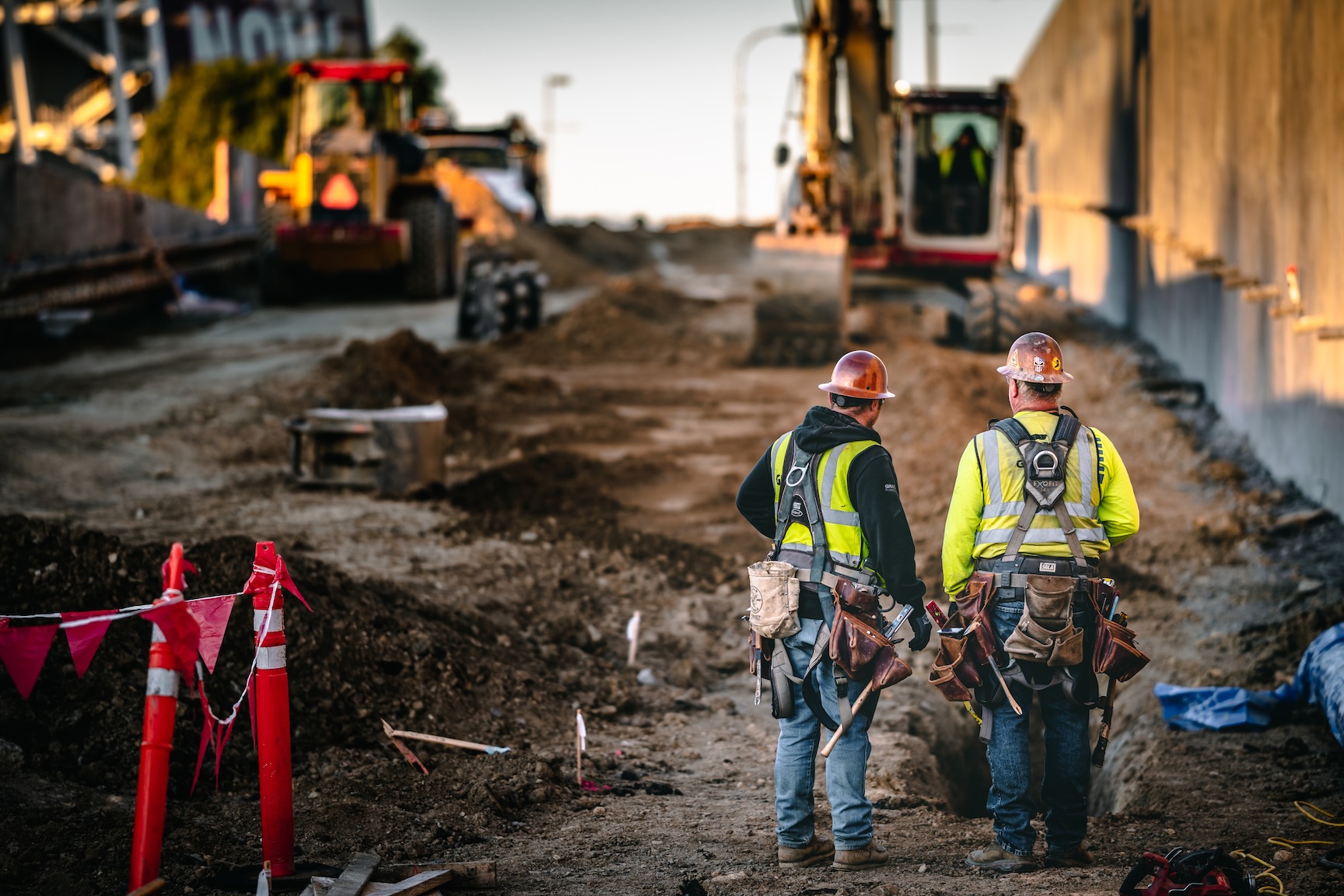
A strong construction pipeline might be good news for contractors and the public in general; however, one challenge seems to mar the positive news. The Associated Builders and Contractors Carolinas released a report on the need for over 350,000 new construction workers across the US. With almost $20 billion in construction projects on the horizon, according to city officials, a labor shortage could be the biggest issue.
25% of the city’s current workforce is nearing retirement age, which could create a labor shortage that will plague local construction companies' demand for skilled workers over the next three decades. To address this issue, the city administration is now investing $2.1 million in workforce and small business programs.
ABC Carolinas has also noted that nearly 40% of counties rely on out-of-state workers to complete road and school projects, which are often top priorities. The labor crunch is also leading to on-site safety issues, with an 8% increase in reported incidents statewide.
Charlotte has also witnessed several corporate relocations, leading to $4.4 billion in public and private investment. $2 billion will be spent on upgrading and converting 20 older buildings in the center city. One of the biggest projects includes the $250 conversion of Duke Energy’s former headquarters into Brooklyn & Church Development. This will add 448 apartments and 55,000 sq. ft. of retail space.
Other buildings undergoing renovations and facelifts include Bank of America Stadium, the Spectrum Center, the Main Library, and the Levine Museum.
There is also an estimated $2.4 billion in new development, including the construction of 4,870 apartments, 1,246,000 square feet of office space, 257,045 square feet of retail, and about 1,500 hotel rooms in uptown and the South End.
To accommodate the new development, investment, and population boom, three new districts are under construction: The Pearl, The Iron District, and the North Tryon Tech Hub. To keep the innovations moving, the mobility infrastructure also needs to be overhauled.
In November 2025, voters approved a tax referendum to generate $25 billion over the next three decades. With reports suggesting that construction spending will peak between 2035 and 2040, reaching an estimated annual spending of $500-600 million. However, the shortage of skilled workers and qualified vendors has raised questions on the project’s viability and on whether the funding can be properly utilized.
Category : Investment in Infrastructure Market Watch Airports